Buy qeu.eu ?
We are moving the project
qeu.eu .
Are you interested in purchasing the domain
qeu.eu ?
domain@kv-gmbh.de · 0541-91531010
Buy qeu.eu ?
Are photons electrons?
No, photons are not electrons. Photons are elementary particles that make up light and electromagnetic radiation, while electrons are negatively charged subatomic particles that are part of atoms. Photons have no mass and travel at the speed of light, while electrons have mass and are bound to the nucleus of an atom. **
How are photons created?
Photons are created through a process called electromagnetic radiation. This occurs when an atom absorbs energy, causing its electrons to move to a higher energy level. When the electrons return to their original energy level, they release the absorbed energy in the form of photons. This process can happen in various ways, such as through thermal radiation, chemical reactions, or nuclear reactions. **


Similar search terms for Photons
Top-Angebote
Products related to Photons:
-
Novadiet Prosnova Progress 60 CapsulesNutrition and Supplements Special supplements Novadiet Prosnova Progress 60 Capsules If you're a man over 40, you've likely begun to notice urinary problems. Benign prostatic hyperplasia (BPH) is the most common reason for male urological consultations. It begins to manifest itself after the age of 40, affecting 80% of men by age 70 and 90% of those over 85. It is a benign, age-related enlargement of the prostate, associated with low testosterone levels, a slow-growing condition that causes significant discomfort and significantly impacts quality of life. Prostate growth compresses the urethra as it passes through the gland, causing a series of secondary discomforts: difficulty starting to urinate; a thin, weak, and intermittent urine stream; a feeling of not having emptied the bladder after urinating; having to urinate multiple times during the day (pollakiuria) and at night (nocturia); urinary incontinence, abdominal pain, and discomfort when urinating may also occur. Take one capsule with breakfast and another with dinner, with water. Recommended daily dose: 2 capsules.15,92 £*Shipping: 3,99 £Secure redirect to the provider
-
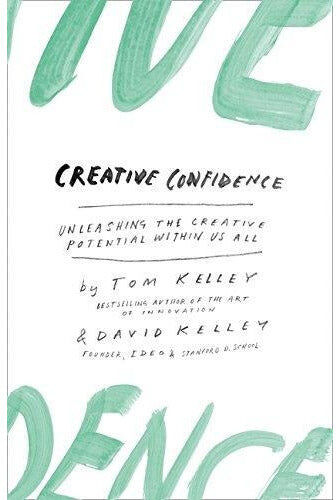
HARPERCOLLINS Creative Confidence by Tom & David Kelley – Unleashing Your Creative Potential & Innovation MindsetA powerful and inspiring book from the founders of IDEO, the award-winning design firm, on unleashing the creativity that lies within each and every one of us. Too often, companies and individuals assume that creativity and innovation are the domain of the ‘creative types’. But two of the foremost experts in innovation, design and creativity on the planet show us that each and every one of us is creative. In an entertaining and inspiring narrative that draws on countless stories from their work at IDEO, and with many of the world's top companies and design firms, David and Tom Kelley identify the principles and strategies that will allow us to tap into our creative potential in our work lives, and in our personal lives, allow us to think outside the box in terms of how we approach and solve problems. ‘Creative Confidence’ is a book that will help each of us be more productive and successful in our lives and in our careers.4,95 £*Shipping: 1,99 £Secure redirect to the provider
-
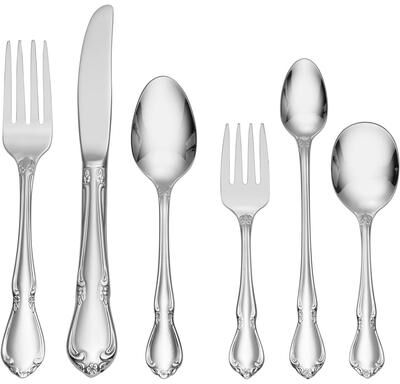
Oneida Little Love 6 Piece Fine Flatware Progress SetNew or experienced, moms need some help. Gift them easier table training with a Little Love for their little ones. Punched heart shapes entertain while including kids with age-appropriate sizes, durable stainless steel, and easy-to-maneuver designs.37,99 $*Shipping: 0,00 $Secure redirect to the provider


-
What happens to photons?
Photons are elementary particles that make up light. They do not have mass and travel at the speed of light. When photons interact with matter, they can be absorbed, reflected, or transmitted. Absorption of photons can result in the excitation of electrons, leading to various physical and chemical processes. **
-
How can one convert the energy of different photons into monochromatic photons?
One way to convert the energy of different photons into monochromatic photons is through a process called frequency doubling or second harmonic generation. This involves passing the photons through a nonlinear crystal, which causes the photons to combine and create new photons with double the frequency and half the wavelength of the original photons. This results in monochromatic photons with a single, specific wavelength. Another method is through the use of filters or monochromators, which can selectively filter out photons of specific wavelengths, allowing only monochromatic photons to pass through. **
-
How can photons have mass?
Photons are massless particles according to the Standard Model of particle physics. They travel at the speed of light and have zero rest mass. However, in certain theoretical models beyond the Standard Model, such as some versions of string theory, it is possible for photons to acquire a small amount of mass through interactions with other particles or fields. This mass is typically very small and has not been experimentally observed. **
-
What distinguishes photons and protons?
Photons are elementary particles that carry electromagnetic radiation, such as light, while protons are subatomic particles found in the nucleus of an atom. Photons have no mass and travel at the speed of light, while protons have mass and are composed of quarks. Additionally, photons do not have an electric charge, while protons have a positive electric charge. **


Why can photons penetrate matter?
Photons can penetrate matter because they do not have an electric charge and are not affected by electromagnetic forces within the material. Additionally, photons do not have mass, allowing them to travel at the speed of light and pass through matter without being absorbed or deflected. This property of photons enables them to interact with atoms and molecules in the material, leading to phenomena such as absorption, reflection, and transmission. **
How far do photons travel?
Photons, as particles of light, travel at the speed of light in a vacuum, which is approximately 299,792 kilometers per second. This means that photons can travel vast distances in a very short amount of time. However, their travel distance can be affected by factors such as absorption, reflection, and scattering, which can cause them to be absorbed or redirected before reaching their destination. **
Top-Angebote
Products related to Photons:
-
Pan Make Brilliant Work: Lessons on Creativity, Innovation and Success by Rod Judkins - Paperback - Self-Help/Business Creativity Guide, Author ofMake Brilliant Work is an inspiring guide by Rod Judkins, drawing on the real-life stories of visionaries from Frida Kahlo to Steve Jobs. This paperback book reveals the methods and mindsets that turn ordinary effort into extraordinary results. Judkins proves that talent alone never guaranteed success — persistence, risk-taking and original thinking did. A motivating read for anyone wanting to unlock their creative potential at work or in life. The book profiles figures who failed at school, were told they lacked talent, or were fired more than once, yet went on to achieve great things. Written by Rod Judkins, published by Pan Macmillan, this book is a reassuring truth: you don't have to be naturally brilliant to produce brilliant work.2,99 £*Shipping: 2,99 £Secure redirect to the provider
-
Uplift Treasures Adjustable Car Accessibility Safety Handle Adjustable Car Accessibility Safety HandleProduct Description Make getting in and out of your vehicle safer and easier with this adjustable car accessibility safety handle. Designed to provide reliable support without tools, it installs quickly and offers a secure grip for seniors,...39,97 $*Shipping: 0,00 $Secure redirect to the provider
-
Novadiet Prosnova Progress 60 CapsulesNutrition and Supplements Special supplements Novadiet Prosnova Progress 60 Capsules If you're a man over 40, you've likely begun to notice urinary problems. Benign prostatic hyperplasia (BPH) is the most common reason for male urological consultations. It begins to manifest itself after the age of 40, affecting 80% of men by age 70 and 90% of those over 85. It is a benign, age-related enlargement of the prostate, associated with low testosterone levels, a slow-growing condition that causes significant discomfort and significantly impacts quality of life. Prostate growth compresses the urethra as it passes through the gland, causing a series of secondary discomforts: difficulty starting to urinate; a thin, weak, and intermittent urine stream; a feeling of not having emptied the bladder after urinating; having to urinate multiple times during the day (pollakiuria) and at night (nocturia); urinary incontinence, abdominal pain, and discomfort when urinating may also occur. Take one capsule with breakfast and another with dinner, with water. Recommended daily dose: 2 capsules.15,92 £*Shipping: 3,99 £Secure redirect to the provider
-
Are photons electrons?
No, photons are not electrons. Photons are elementary particles that make up light and electromagnetic radiation, while electrons are negatively charged subatomic particles that are part of atoms. Photons have no mass and travel at the speed of light, while electrons have mass and are bound to the nucleus of an atom. **
-
How are photons created?
Photons are created through a process called electromagnetic radiation. This occurs when an atom absorbs energy, causing its electrons to move to a higher energy level. When the electrons return to their original energy level, they release the absorbed energy in the form of photons. This process can happen in various ways, such as through thermal radiation, chemical reactions, or nuclear reactions. **
-
What happens to photons?
Photons are elementary particles that make up light. They do not have mass and travel at the speed of light. When photons interact with matter, they can be absorbed, reflected, or transmitted. Absorption of photons can result in the excitation of electrons, leading to various physical and chemical processes. **
-
How can one convert the energy of different photons into monochromatic photons?
One way to convert the energy of different photons into monochromatic photons is through a process called frequency doubling or second harmonic generation. This involves passing the photons through a nonlinear crystal, which causes the photons to combine and create new photons with double the frequency and half the wavelength of the original photons. This results in monochromatic photons with a single, specific wavelength. Another method is through the use of filters or monochromators, which can selectively filter out photons of specific wavelengths, allowing only monochromatic photons to pass through. **
Similar search terms for Photons
-
HARPERCOLLINS Creative Confidence by Tom & David Kelley – Unleashing Your Creative Potential & Innovation MindsetA powerful and inspiring book from the founders of IDEO, the award-winning design firm, on unleashing the creativity that lies within each and every one of us. Too often, companies and individuals assume that creativity and innovation are the domain of the ‘creative types’. But two of the foremost experts in innovation, design and creativity on the planet show us that each and every one of us is creative. In an entertaining and inspiring narrative that draws on countless stories from their work at IDEO, and with many of the world's top companies and design firms, David and Tom Kelley identify the principles and strategies that will allow us to tap into our creative potential in our work lives, and in our personal lives, allow us to think outside the box in terms of how we approach and solve problems. ‘Creative Confidence’ is a book that will help each of us be more productive and successful in our lives and in our careers.4,95 £*Shipping: 1,99 £Secure redirect to the provider
-
Oneida Little Love 6 Piece Fine Flatware Progress SetNew or experienced, moms need some help. Gift them easier table training with a Little Love for their little ones. Punched heart shapes entertain while including kids with age-appropriate sizes, durable stainless steel, and easy-to-maneuver designs.37,99 $*Shipping: 0,00 $Secure redirect to the provider
-
Sirius Dice - Progress Pride Dice Set - Rainbow-Coloured - Board GamesAdd colour and meaningful representation to your tabletop games with this Progress Pride dice set from Sirius Dice. Designed for Dungeons & Dragons players, the set features clear dice with rainbow-coloured numbering and an embedded Progress Pride flag detail in every die. The vibrant colour treatment makes the numbers easy to distinguish during play, while the compact set is suitable for adventurers, Dungeon Masters, and collectors alike. It's a distinctive accessory for regular game sessions, character creation, and display.16,77 £*Shipping: 3,95 £Secure redirect to the provider
-
Roommates Minions Science In Progress Grey Peel and Stick WallpaperCelebrate curiosity and creativity with this Minions peel and stick wallpaper inspired by lab sketches and inventive graphics, blending modern design with the Minions' wonderfully unpredictable spirit.59,99 $*Shipping: 0,00 $Secure redirect to the provider
-
How can photons have mass?
Photons are massless particles according to the Standard Model of particle physics. They travel at the speed of light and have zero rest mass. However, in certain theoretical models beyond the Standard Model, such as some versions of string theory, it is possible for photons to acquire a small amount of mass through interactions with other particles or fields. This mass is typically very small and has not been experimentally observed. **
-
What distinguishes photons and protons?
Photons are elementary particles that carry electromagnetic radiation, such as light, while protons are subatomic particles found in the nucleus of an atom. Photons have no mass and travel at the speed of light, while protons have mass and are composed of quarks. Additionally, photons do not have an electric charge, while protons have a positive electric charge. **
-
Why can photons penetrate matter?
Photons can penetrate matter because they do not have an electric charge and are not affected by electromagnetic forces within the material. Additionally, photons do not have mass, allowing them to travel at the speed of light and pass through matter without being absorbed or deflected. This property of photons enables them to interact with atoms and molecules in the material, leading to phenomena such as absorption, reflection, and transmission. **
-
How far do photons travel?
Photons, as particles of light, travel at the speed of light in a vacuum, which is approximately 299,792 kilometers per second. This means that photons can travel vast distances in a very short amount of time. However, their travel distance can be affected by factors such as absorption, reflection, and scattering, which can cause them to be absorbed or redirected before reaching their destination. **
* All prices are inclusive of VAT and, if applicable, plus shipping costs. The offer information is based on the details provided by the respective shop and is updated through automated processes. Real-time updates do not occur, so deviations can occur in individual cases. ** Note: Parts of this content were created by AI.